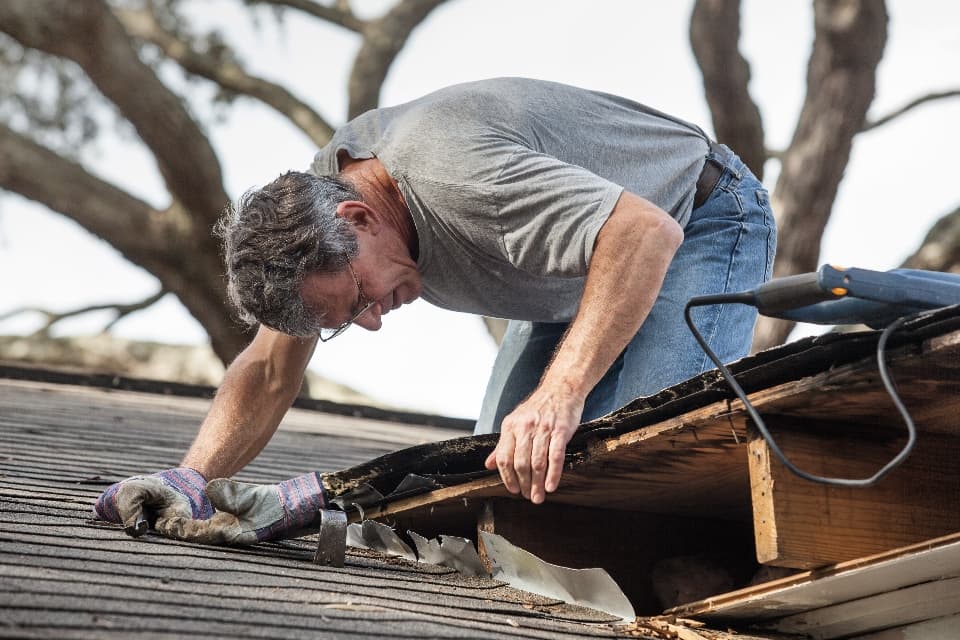

If your ceiling has a wet spot, the first step is simple: take photos, avoid touching or painting the area, and call a professional to find where the water is coming from.
That spot may look small. It may even look dry. But a ceiling water stain is usually a symptom, not the actual problem. Water has already made its way somewhere it does not belong, and the stain is just where it finally showed up.
For homeowners in Sarasota, Manatee, and Charlotte County, a roof leak is one of the first issues to rule out, especially if the stain appeared after rain, wind, or storm-season weather. Florida humidity, attic condensation, and water ingress can also complicate things.
The right order matters: stop the leak first, then fix the drywall.
First Thing to Do: Take Photos and Call a Professional

When you notice a wet spot on the ceiling, do not start with a paint roller, drywall knife, or attic ladder. Start with documentation.
Take a few clear photos of the stain. Get one close-up, then take a wider photo that shows where the stain is located in the room. If you remember when you first noticed it, write that down too. It also helps to note whether the water spot appeared after heavy rain, strong wind, or a recent storm.
From there, call a professional.
If the stain is on a top-floor ceiling, appeared after rain, or is near an exterior wall, vent, skylight, chimney, or roofline, a roofing specialist should be your first call. SonShine Roofing can perform a professional roof inspection, identify likely sources of water ingress, and help you understand whether you are dealing with a roof leak or something else.
Also, use common sense around safety. If water is near a light fixture, ceiling fan, smoke detector, or visible electrical component, stay clear of that area and contact the appropriate licensed professional.
Stop the Leak First, Then Fix the Drywall
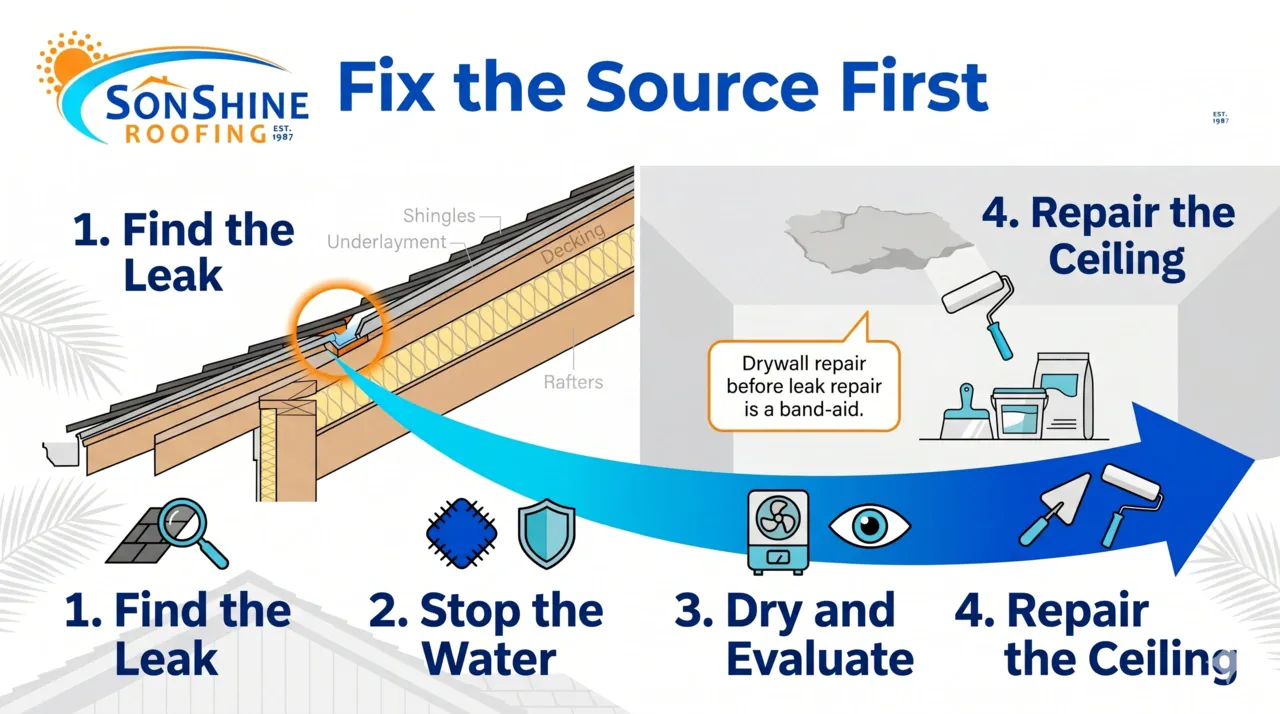
A ceiling water stain is not a drywall problem first. It is a water problem first.
That is why drywall repair should come after the source of the leak has been found and fixed. If you repair the ceiling before stopping the water, you are putting a fresh finish over an active problem. It may look better for a little while, but if water is still getting in, the stain can come back, the drywall can soften, and hidden moisture can spread.
Painting over a water stain can also make diagnosis harder. It hides the visible evidence that helps a professional understand where the water traveled, how long the issue may have been present, and whether the stain is active or old.
The correct order is:
- Find the source of the water.
- Stop the leak or water ingress.
- Let the affected area dry and get evaluated.
- Repair the drywall, texture, and paint.
This order saves time, money, and frustration. It also helps preserve a clearer record if insurance documentation becomes part of the conversation. The Florida Department of Financial Services advises homeowners to report claims promptly, make needed repairs to protect property from further damage, take photos before and after repairs, and keep receipts.
Is It a Roof Leak or Something Else?
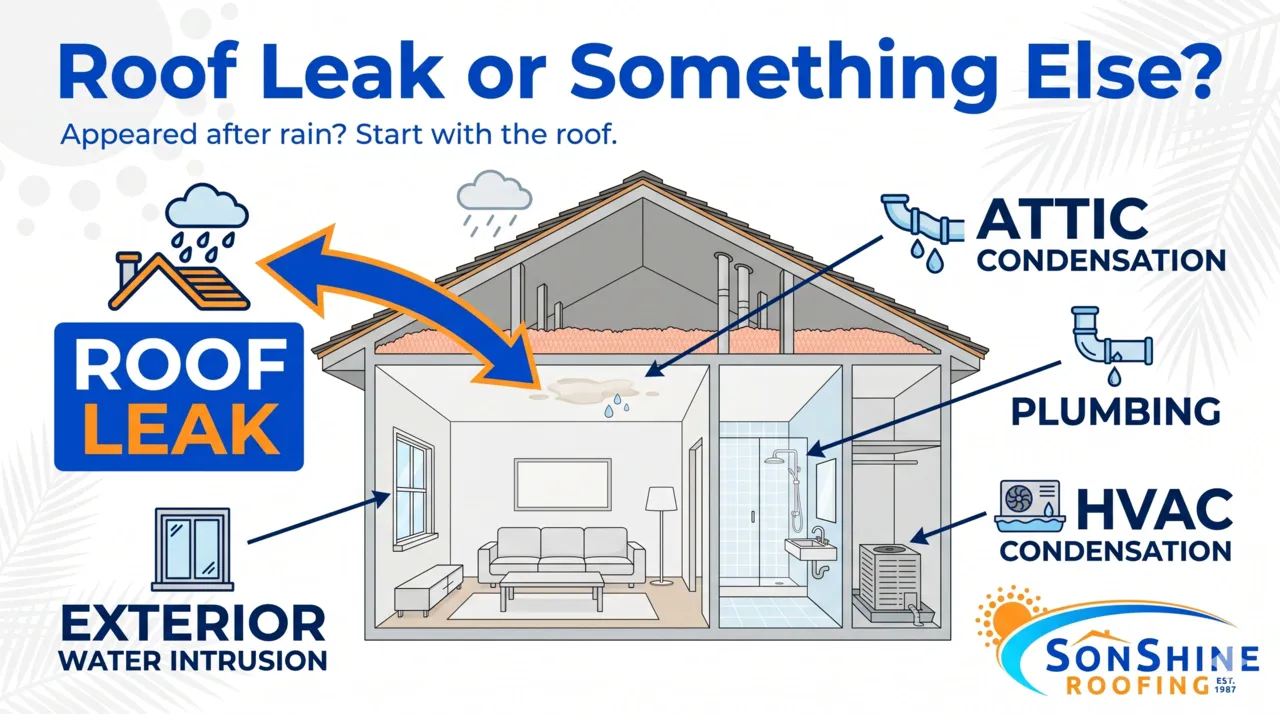
A wet spot on the ceiling is not always a roof leak, but in our part of Florida, a roofing issue is one of the first things to rule out.
That is especially true if:
- The ceiling stain appeared after rain.
- The spot is on the top floor.
- The stain gets darker during storms.
- The water spot is near a roof valley, vent, skylight, chimney, or exterior wall.
- You notice more than one ceiling water stain after hurricane season.
The National Hurricane Center notes that Atlantic hurricane season runs from June 1 through November 30, which is when Gulf Coast homes often see more wind-driven rain and storm-related roof stress.
That said, there are other possible causes.
If the stain is below a bathroom, laundry room, kitchen, or water heater, a plumbing issue may be more likely. If the stain is near an air handler, AC closet, or condensate line, HVAC condensation could be involved. If the stain is near a window, wall, or stucco area, exterior wall water intrusion may be part of the issue.
Attic condensation can also create staining, especially in humid climates. The EPA recommends keeping indoor humidity below 60 percent when possible, ideally between 30 and 50 percent, and acting quickly when condensation or moisture appears on surfaces.
A Simple Decision Tree for a Ceiling Water Stain

Use this as a starting point, not a final diagnosis.
| What You Notice | Who to Call First |
|---|---|
| Wet spot appeared after rain | Roofing professional |
| Stain is on a top-floor ceiling | Roofing professional |
| Stain is below a bathroom, laundry room, or kitchen | Plumber |
| Stain is near an AC closet or air handler | HVAC professional |
| Water is near lights, fans, or wiring | Licensed electrician |
| Stain is near an exterior wall, window, or stucco area | Roofing or exterior finishing professional |
One important note: water can travel before it shows up.
The wet spot on your ceiling may not be directly below the leak. Water can move along roof decking, rafters, insulation, wiring paths, and drywall seams before it finally stains the ceiling. In some cases, a small roof leak can take weeks or even months to become visible inside the home.
Why Ceiling Water Stains Can Show Up Late
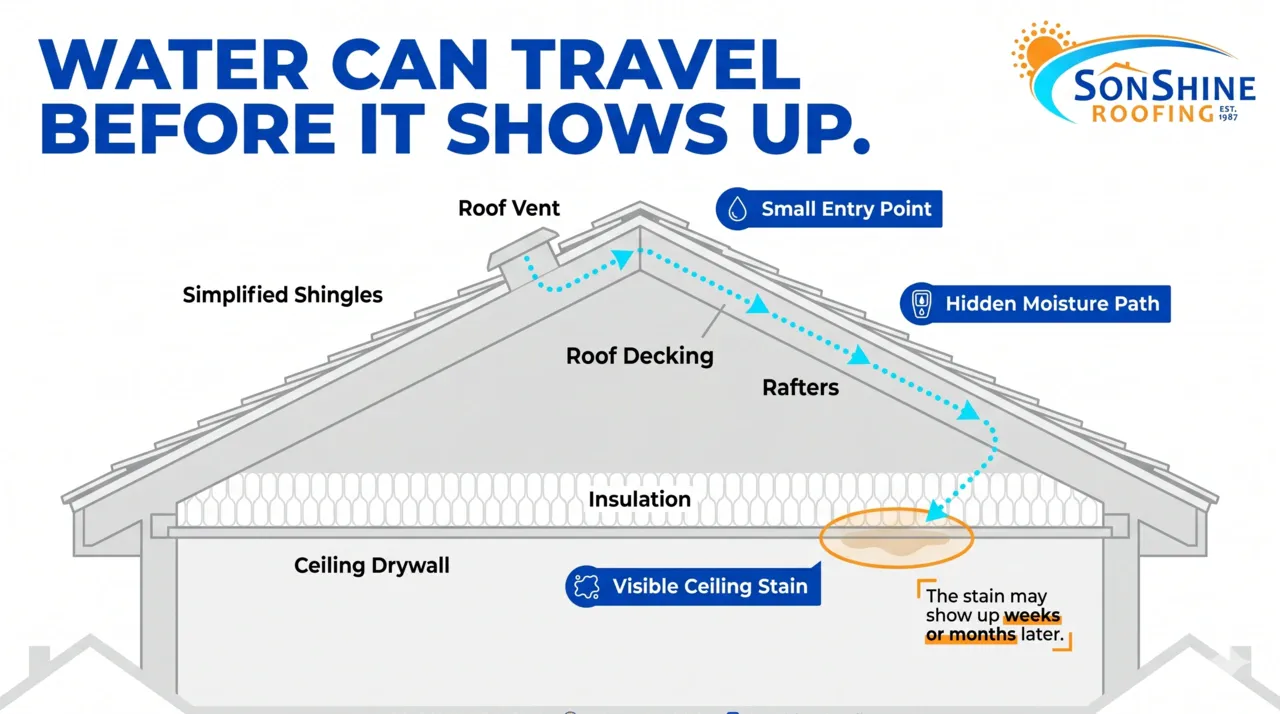
A ceiling water stain may be the last thing you see, not the first thing that happened.
Water does not always travel in a straight line. It can enter through a small roofing issue, move along framing or underlayment, soak insulation, then eventually reach the drywall. By the time you see a brown stain, bubbling paint, or a soft ceiling spot, the source may have been active for a while.
That is one reason a “wait and see” approach can get expensive.
A stain that dries out still matters. A stain that comes back after rain matters even more. And a stain that grows, darkens, or starts to sag should be looked at as soon as possible.
The EPA’s mold guidance is straightforward: moisture control is key, and wet or damp materials should be dried quickly after leaks or spills to reduce mold risk.
Common Roof Leak Sources in Sarasota, Manatee, and Charlotte County Homes
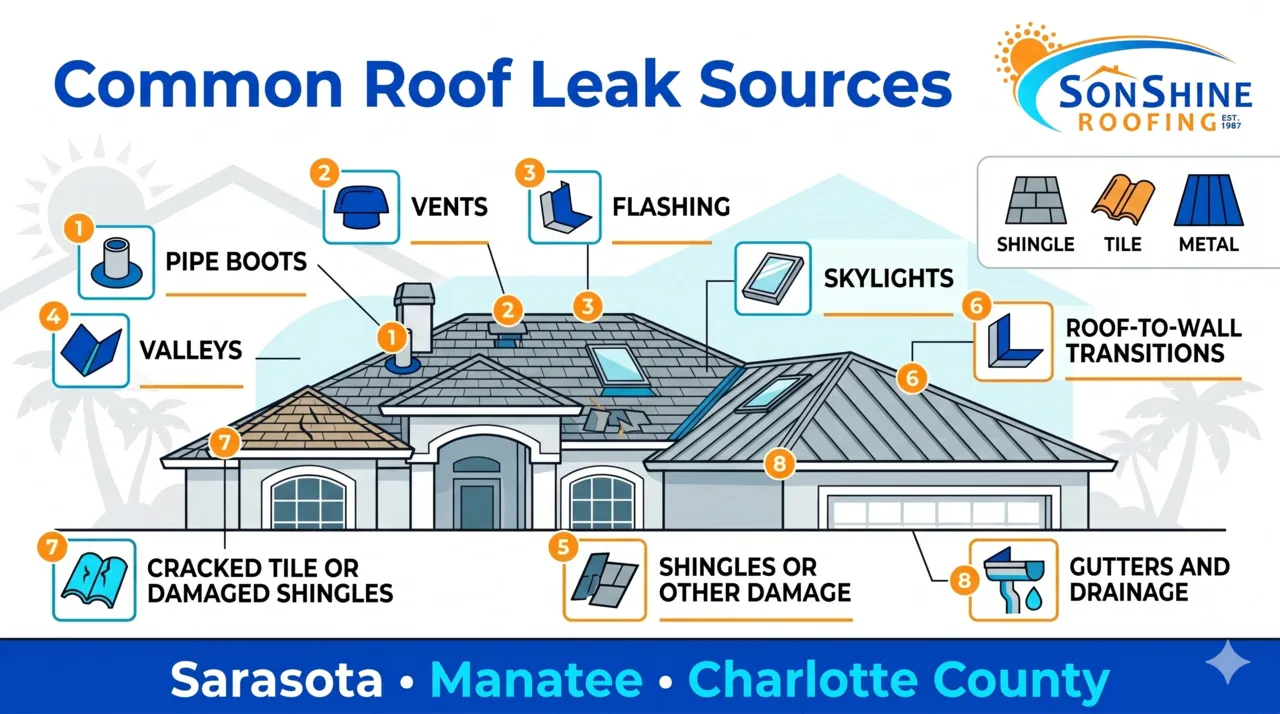
Roof leaks often start at roof penetrations, transitions, drainage points, and aging materials. In plain English, leaks usually show up where one part of the roof system meets another.
Common leak sources include:
- Pipe boots
- Roof vents
- Flashing
- Valleys
- Skylights
- Chimney areas
- Roof-to-wall transitions
- Cracked or slipped tile
- Damaged shingles
- Underlayment issues
- Loose or failed fasteners on metal roofs
- Clogged gutters or poor drainage
In Sarasota, Bradenton, Venice, North Port, Port Charlotte, Lakewood Ranch, and nearby Gulf Coast communities, wind-driven rain can expose weak points fast. Shingle roofs, tile roofs, and metal roofs all have their own failure points, and the right repair depends on the roof system, age, installation details, and location of the leak.
A professional roof repair starts with diagnosis. If a roof is simply dealing with one isolated issue, a targeted repair may solve the problem. If the inspection shows widespread age-related failure, SonShine can also walk you through whether repair or roof replacement in Sarasota, FL makes more sense.
What NOT to Do When Your Ceiling Has a Water Spot
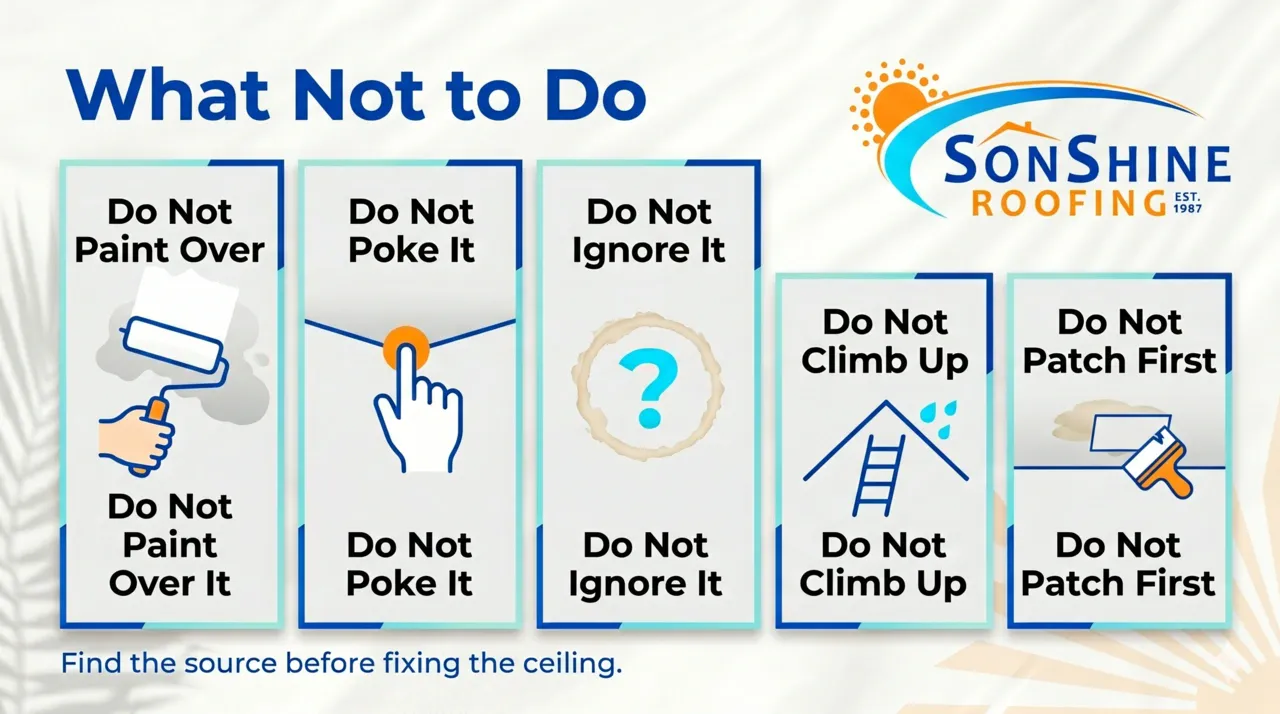
When your ceiling has a water spot, the wrong first move can make the problem harder to fix.
Do not paint over it.
Paint may cover the stain, but it does not stop water from getting in. It can also hide useful evidence.
Do not poke the ceiling.
If water is collecting above the drywall, poking it can make the damage worse or create a safety issue.
Do not assume it is fixed because it dried.
A dry stain may still point to a leak that only appears during certain weather conditions.
Do not climb on the roof during or after rain.
Wet roofs and ladders are a bad combination. Let a roofing professional handle the roof and attic inspection.
Do not make ceiling repair the first call if the source is unknown.
Drywall repair matters, but only after the water source has been found, fixed, and evaluated.
In other words, do not grab a paint roller and declare victory. A clean-looking ceiling does not mean the water source is gone.
What SonShine Roofing Does When You Call
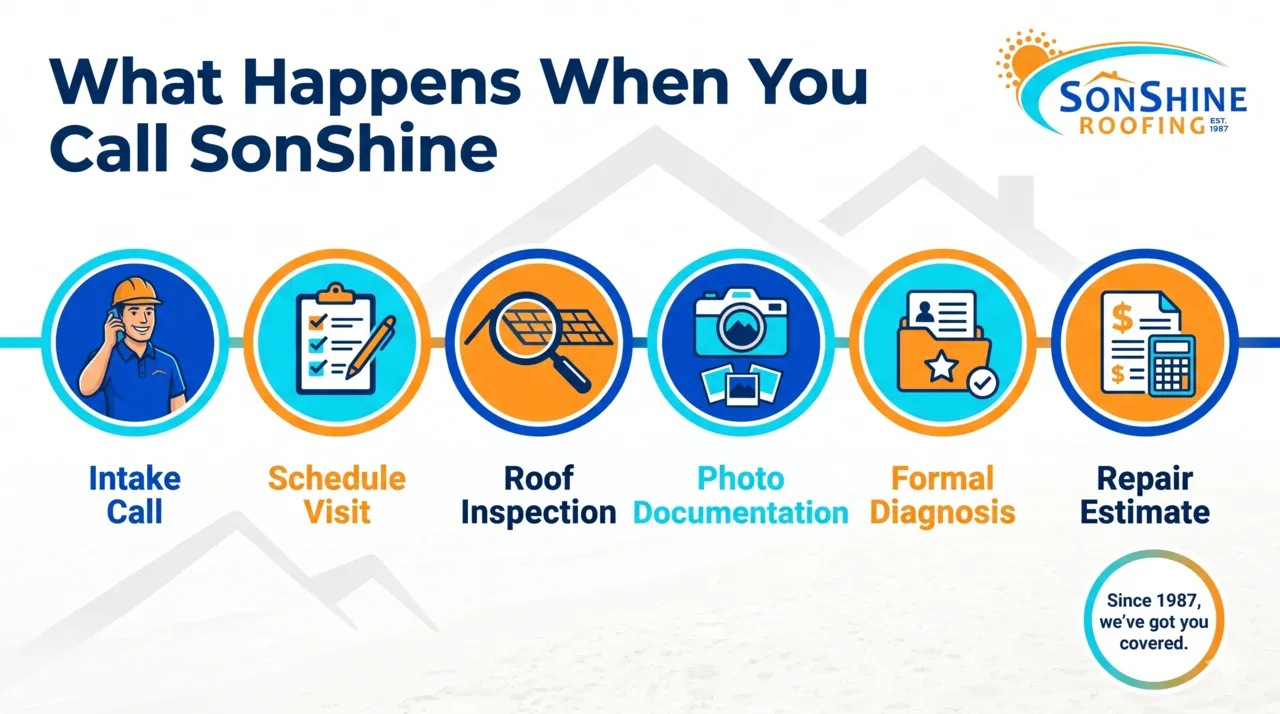
When you call SonShine Roofing about a wet spot on your ceiling, the goal is not a quick patch or a guess. The goal is to find the source and give you a clear path forward.
Here is the usual process:
- You call SonShine and explain what you are seeing.
- We schedule a home visit with one of our roofing specialists.
- We perform a professional roof inspection.
- We look for likely sources of water ingress.
- We provide photo documentation.
- We give you a formal diagnosis.
- We provide a repair estimate or recommend the correct trade if the issue is not roofing-related.
- If roofing work is needed, we schedule the repair.
- We follow up so you know what was done and why.
For homeowners who want to stay ahead of problems, SonShine also offers the Tip Top Roof Check-up, a professional roof check designed to catch concerns before they become bigger headaches.
Want Fewer Roofing Surprises? Join the Roof Care Club.

A ceiling water stain is stressful because it usually shows up after the problem has already started. SonShine’s Roof Care Club is built to help homeowners catch small issues earlier through preventative roof maintenance and consistent documentation.
Members receive one complimentary Tip Top Roof Check-up per year, a standardized inspection checklist, photo documentation stored in customer records, and notes that can support maintenance planning and insurance reference.
It is simple preventative maintenance for the roof over your head.
Learn more about the Roof Care Club
After the Leak Is Fixed, Call Vowell Construction for Ceiling Repair
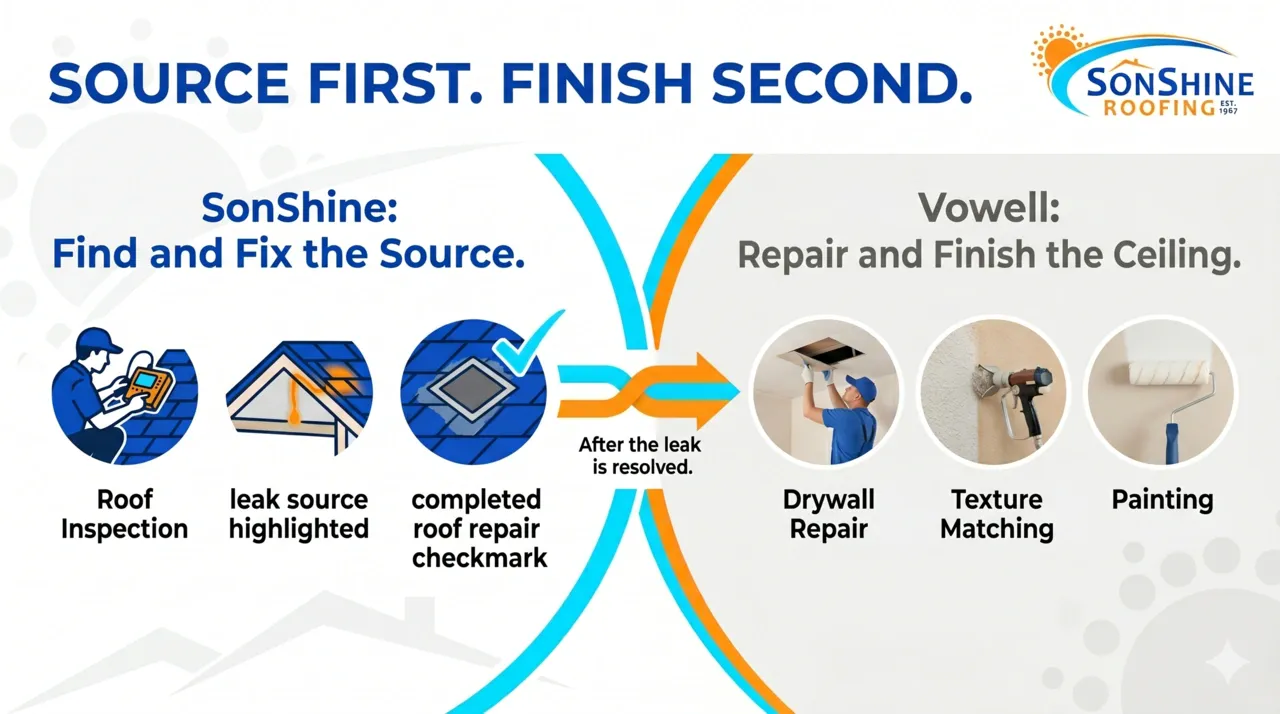
Once the water source is fixed and the affected area has been dried or professionally evaluated, then it is time to repair the inside.
That is where Vowell Construction comes in.
SonShine Roofing recommends Vowell Construction as a trusted local finishing partner for homeowners who need quality interior repair after a roof leak or water ingress issue. Vowell brings 20-plus years of experience and handles drywall, stucco, painting, and masonry work for Sarasota-area homeowners. Their public service information lists drywall repair and patching, texture matching and finishing, painting after drywall or stucco work, stucco repair, and masonry repair among their services.
Once SonShine has diagnosed and resolved the source of the water, Vowell Construction can help restore the inside with professional drywall, stucco, painting, and masonry services.
This is the order that makes sense:
- SonShine identifies and fixes the roofing source.
- The affected area is dried and evaluated.
- Vowell repairs the drywall, matches the texture, and finishes the ceiling.
If the situation requires mitigation or restoration support, Vowell can coordinate with the right professionals so the repair is handled properly from start to finish.
The order matters. Fixing the drywall first may make the ceiling look better for a little while, but it does not stop water from coming back.
A Real-World Example: The Right Order Saves Time and Money

Picture this.
A homeowner in Lakewood Ranch notices a faint brown stain on the ceiling after a heavy summer storm. It dries out, so they wait. A few weeks later, another storm rolls through, and the stain gets bigger.
They call SonShine Roofing. During the roof inspection, the roofing specialist finds the likely leak source around a roof transition. SonShine provides photo documentation, explains the issue, and gives a repair estimate.
After the roof repair is completed and the affected area is dry, the homeowner contacts Vowell Construction. Vowell repairs the drywall, matches the ceiling texture, and finishes the area so it looks right again.
That is the clean sequence: source first, ceiling second.
Final Checklist: What to Do When Your Ceiling Has a Wet Spot
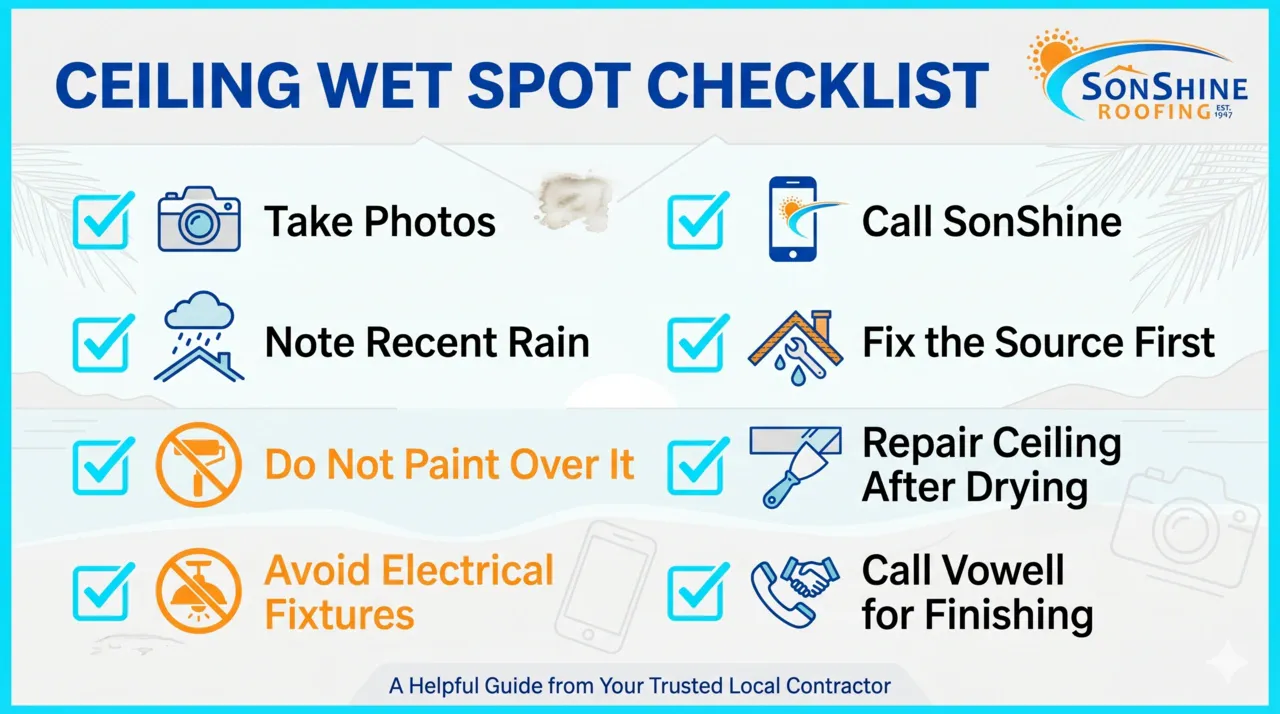
If your ceiling has a wet spot, here is the simple version:
- Take photos of the stain and the surrounding room.
- Note when you first saw it.
- Pay attention to recent rain, wind, or storms.
- Do not paint over the stain.
- Do not poke the ceiling.
- Stay away from electrical fixtures if water is nearby.
- Call SonShine Roofing if the stain may be roof-related.
- Fix the water source first.
- Let the affected area dry and get evaluated.
- Repair drywall, texture, and paint after the leak is fixed.
- Contact Vowell Construction for finishing work once the water issue is resolved.
FAQs About Ceiling Wet Spots and Water Stains
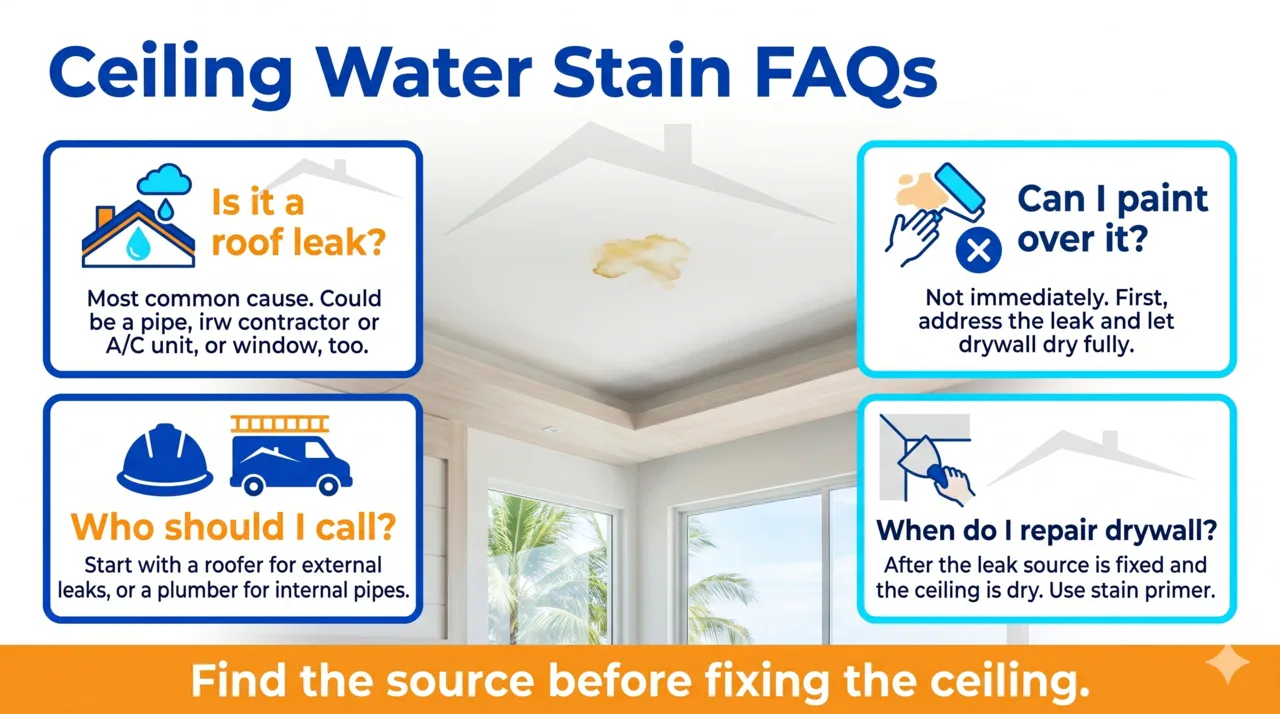
Is a wet spot on the ceiling always a roof leak?
No. A wet spot on the ceiling can come from a roof leak, attic condensation, plumbing, HVAC condensation, or exterior wall water intrusion. If the stain appeared after rain or is on a top-floor ceiling, a roofing professional is usually the right first call.
Who should I call first if my ceiling has a water stain?
If the ceiling water stain appeared after rain, call a roofing professional first. If it is directly below a bathroom, laundry room, kitchen, or water heater, call a plumber. If it is near an air handler or AC closet, call an HVAC professional.
Can I paint over a ceiling water stain?
Not yet. Painting over a ceiling water stain can hide the problem while the source keeps leaking. Fix the water source first, make sure the area is dry, then repair and repaint the ceiling.
Can a roof leak take months to show up as a ceiling stain?
Yes. Water can travel through roofing materials, attic space, insulation, and drywall before it becomes visible. A small roof leak may take weeks or months to show as a ceiling stain.
Should I check the attic myself?
It is better to let a professional inspect the attic and roof system. Attic spaces can be difficult to access safely, and water damage is not always obvious without the right experience.
What if the wet spot is near a light fixture or ceiling fan?
Avoid the area and contact the appropriate licensed professional. Water near electrical fixtures can create a safety hazard.
When should I repair the drywall?
Repair the drywall after the source of the water has been fixed and the affected area has been dried or professionally evaluated. Otherwise, the stain may come back.
Does SonShine Roofing repair the ceiling too?
SonShine Roofing focuses on diagnosing and resolving the roofing source of the water issue. After the leak is fixed, SonShine recommends Vowell Construction for interior drywall repair, texture matching, painting, and finishing work.
Fix the Source First. Then Fix the Ceiling.

If your ceiling has a wet spot, do not wait for it to become a bigger problem. Take photos, avoid covering it up, and schedule a visit with one of SonShine Roofing’s roofing specialists.
We will inspect the roof, identify the likely source of water ingress, and give you a clear next step. If roofing work is needed, we will provide a repair estimate. If the issue points to another trade, we will tell you that too.
Once the leak is handled, Vowell Construction can help repair the drywall, match the ceiling texture, and make the inside of your home look right again.
Since 1987, we’ve got you covered.
Schedule a Free Consultation / Estimate or call (941) 866-4320
Learn More about the Roof Care Club to prevent future surprises for pennies on the dollar.